Renovating or expanding an existing commercial building is often more complex than starting from scratch. Whether you are updating a hotel, modernizing an office, expanding a manufacturing plant, or repositioning a retail property, you are working within real-world constraints. Existing structures, active tenants, aging systems, and tight schedules all add layers of risk.
Crain Construction has spent decades helping owners navigate those challenges. By taking on adaptive reuse projects and occupied facility renovations, we’ve learned that successful commercial remodels are not driven by flashy design. Instead, they benefit from disciplined planning, smart phasing, and a construction partner who understands how buildings actually work.
3 Factors for a Successful Commercial Renovation, Addition, or Remodel
If you are a building owner in the industrial, hospitality, or mixed-use sectors, here is what you need to know to ensure your next renovation adds long-term value:
1. Scope Clarity Sets the Entire Project Up for Success
The biggest mistake owners make on renovation projects is underestimating what the work actually involves. Existing buildings hide surprises. Structural systems may not match the original drawings, and utilities may not meet current codes. Moisture, corrosion, or past shortcuts can surface once demolition begins.
Successful projects start with honest, detailed scope planning. That means:
- Investigating existing conditions early
- Verifying structural capacity
- Reviewing code and life-safety requirements
- Understanding how the space will be used after renovation
At Crain, we push for early field verification, preconstruction budgeting, and collaboration with engineers and architects before final design. When you know what you are working with, you can price and schedule the project with confidence instead of reacting to surprises later.
2. Renovating Occupied Commercial Spaces Requires a Different Strategy
Many renovation projects happen while businesses stay open. That adds another layer of complexity. Noise, dust, access, and safety measures can all affect daily operations.
Crain has managed this challenge across auto dealerships, hotels, manufacturing plants, and offices. The key is thoughtful phasing and constant communication. We divide projects into zones, coordinate work around peak business hours, and create temporary paths for employees, customers, and deliveries.
A renovation should improve a business, not disrupt it. Planning how people will move through the building is just as important as how the walls will be built.
3. Structural and Building Systems Matter More Than Finishes
New paint and finishes change how a space looks, while structural upgrades, roofing improvements, moisture control, and mechanical systems can change how a building performs.
Some of the most important renovation work is invisible. Reinforcing framing, upgrading electrical service, correcting drainage, or improving HVAC often protects the long-term value of the asset.
Crain helps owners prioritize these investments so they do not spend money on surface-level improvements while deeper issues remain unresolved.
Commercial Renovation and Adaptive Reuse Projects in Nashville
Crain has led some of Nashville’s most complex renovation and adaptive reuse projects over the years. Here are a few that highlight the range of our experience:
Fairlane Hotel
This adaptive reuse and commercial renovation project in downtown Nashville transformed a former bank headquarters into a boutique hotel. The project required structural upgrades, modern life-safety systems, and careful preservation of architectural details.
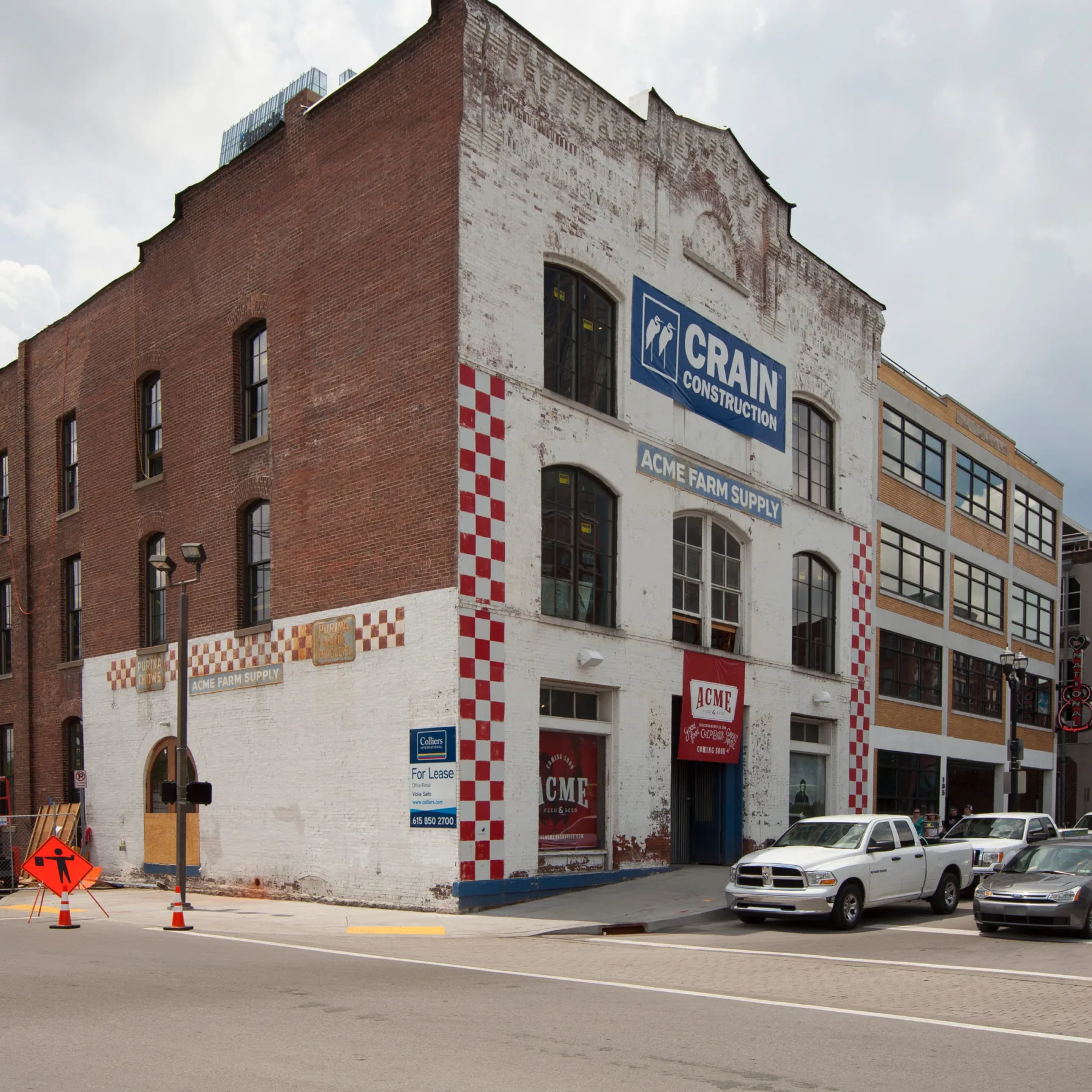
Acme Feed & Seed
Acme Feed & Seed’s historic building renovation converted the site into one of Nashville’s most recognizable entertainment venues. This project blended preservation, structural reinforcement, and modern building systems in a high-traffic environment.
Lexus of Cool Springs
This commercial renovation and building expansion project was completed while the dealership remained fully operational. We carefully phased work so sales, service, and customer access continued without interruption.
Holy Trinity Greek Orthodox Church
This commercial renovation addressed long-standing moisture issues that threatened the building. The work protected the church’s investment while preserving its architectural integrity.
Crain Construction Headquarters
Our own office was originally a warehouse that Crain built in 1959. We converted it into Class A office space, giving us firsthand experience in adaptive reuse and modernizing older structures.
Marriott Tri-Brand Hotel
We converted a third-floor parking garage into 36 high-end guest suites while the hotel remained open. This complex hospitality renovation required tight logistics, structural coordination, and constant collaboration with hotel staff to minimize disruption.
Feintool
Crain supported multiple expansions and renovations at this manufacturing facility while maintaining 24/7 operations. The updates required precision, safety planning, and close coordination with plant leadership – key considerations in occupied industrial renovation projects
Your Partner in the Pivot
Renovation, remodeling, and adaptive reuse projects succeed when you have a contractor who thinks like an owner. You need a team that plans for risk, communicates clearly, and respects the realities of an operating building.
Crain brings that mindset to every project. Our experience across hospitality, industrial, mixed-use, and commercial construction and renovations allows us to help clients make smart decisions before and during construction.
If you are considering a commercial renovation or addition in Middle Tennessee, our team is ready to help evaluate your building and map a path forward.