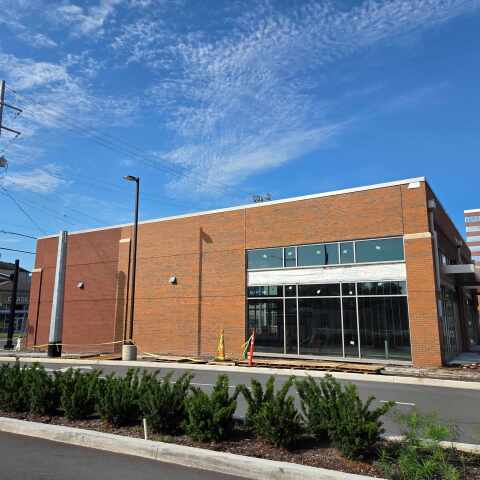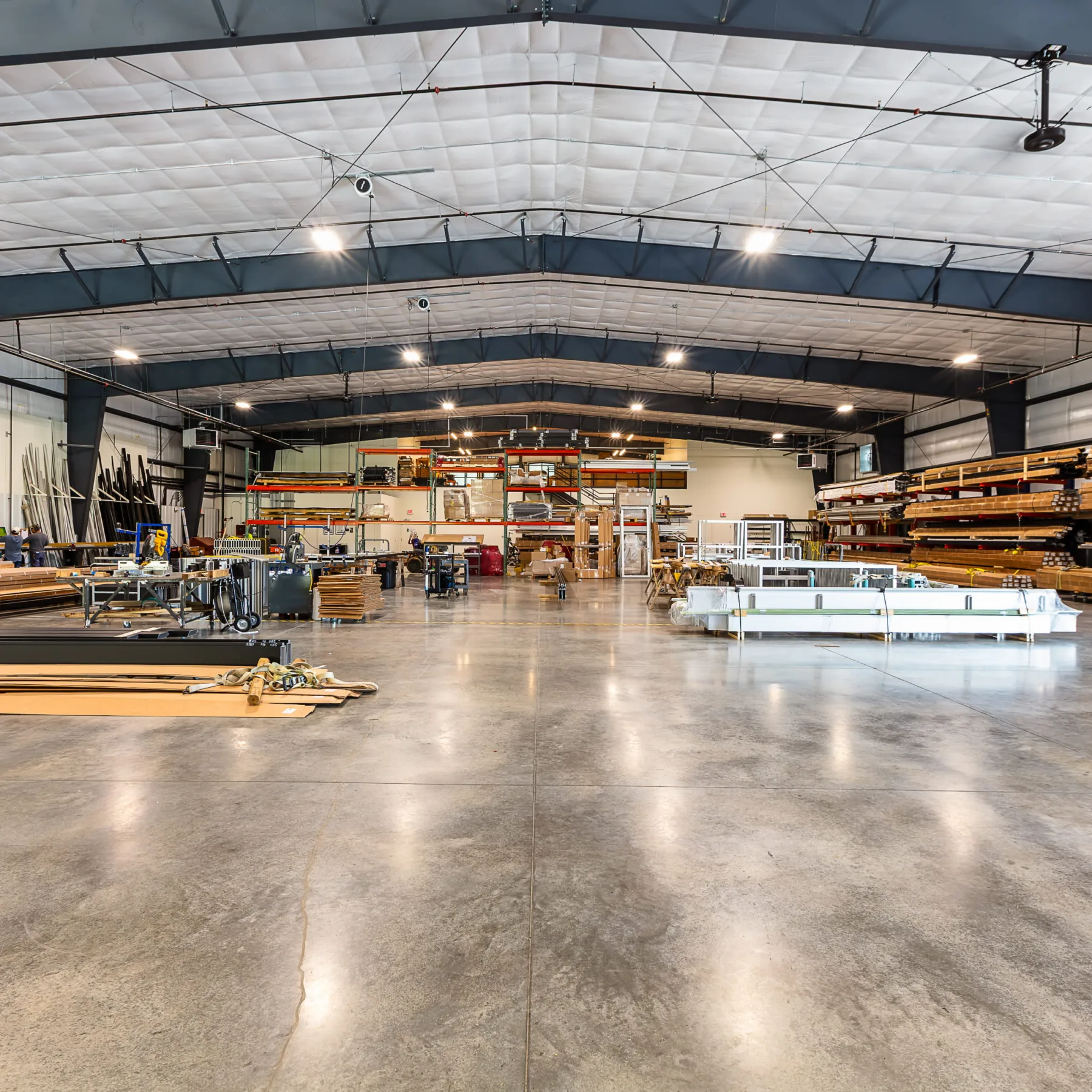
Industrial development across Nashville and Middle Tennessee continues to move at a steady pace. From distribution hubs to flex-space warehouses, we’ve seen more companies looking to establish or expand their footprint here. At Crain Construction, we have been fortunate to be at the forefront of this growth for decades. Our history in this city allows us to see these projects not just as steel and concrete, but as critical infrastructure for the businesses that drive our local economy.
On the surface, an 80,000 to 100,000-square-foot warehouse can seem straightforward. In reality, these projects carry a lot of complexity beneath that simplicity. The decisions made early on have a direct impact on cost, schedule, and long-term performance.
That’s why we like to get involved early in the construction process. Our preconstruction team spends a lot of time asking questions and collaborating with owners and architects to think through the details before the first shovel hits the ground.
In this article, we wanted to offer insights into some of the most frequently asked questions we receive when it comes to warehouse construction, as well as tips developers may want to consider as they plan for an industrial construction or expansion project in Nashville.
Real Answers to Common Industrial and Warehouse Construction Questions
Here are some of the most common questions we hear and how we help clients work through them.
1. What is the first thing to evaluate when choosing a site?
Most people assume you start with price, frontage, or proximity to the interstate. Those are important, but they are not the first filter.
In Nashville, the first hurdle is determining if the parcel can support your specific industrial use without triggering avoidable friction with local authorities. Metro Nashville Codes will review your application for setbacks, footprint, and height based on zoning. Simultaneously, the Planning department guides you through overlays and land-development issues.
We encourage owners to evaluate site constraints early and have a good understanding of Nashville Codes and Zoning protocols before moving too far into design. A site that looks attractive on paper can quickly become complicated if entitlement hurdles are not understood up front.
2. How early should utilities be addressed?
The answer is immediately. Nashville Electric Service (NES) is very clear: it is essential to contact them early. They need time for engineering design and material procurement to meet your in-service date. Metro Water is equally involved, routing developers through availability studies and technical reviews. In the current market, utility timing is a scheduling matter more than a technical one. If you wait until construction starts to talk to the city about capacity fees and sign-offs, you will likely face a standstill.
3. What floor load should we design for?
We often see developers aim for a generic marketing number for their floor slabs. We encourage a different approach: design the slabs to fit the project, not a quota. A slab-on-ground must be strong enough to support materials stored directly on it, heavy racking systems, and the dynamic loads of forklifts and vehicles.
Instead of asking how thick the concrete should be, we ask about pallet weights and traffic patterns. Will you use high-reach trucks? What are the axle loads? Designing for the actual racking density you need prevents the slab from cracking under pressure or becoming an expensive overbuild.
4. What clear height makes sense for a mid-size warehouse?
Clear height is the distance from the floor to the lowest hanging member, such as a joist or sprinkler head. It is the most important measure of your usable interior space. We see modern logistics buildings in Nashville landing anywhere from 32 feet to 40 feet clear.
The goal is to maximize usable volume without overbuilding. A well-aligned, clear height improves efficiency, supports tenant flexibility, and strengthens long-term value.
5. How should dock layout and door count be determined?
This comes down to flow. Door count is not a simple ratio tied to square footage.
Truck frequency, loading times, trailer storage, and future tenant needs all influence dock design. For example, at Crain, our team will talk with owners about how goods will move in and out of the building. We also evaluate truck courts, turning radiuses, and staging areas. A well-planned dock layout improves efficiency and reduces congestion. It also positions the building to accommodate a wider range of users over time.
6. How much should site access and traffic concern the team?
Traffic and site access can have a greater effect than most teams expect.
Nashville traffic studies identify how your project impacts the surrounding roads. You may be required to add signals, turn lanes, or safety improvements. If your site is on a state highway, TDOT requires a specific entrance permit. Truck routing and turning movements must be tested before your site plan hardens.
7. How do you keep future expansion from becoming a second expensive project?
It is almost always cheaper to design for industrial expansion now than to retrofit later. We have seen this firsthand with clients like Old Dominion and Feintool. For example, we delivered a 65,000-square-foot addition for Old Dominion while their terminal remained operational 24/7.
For a new 80,000-square-foot build, this means preserving expansion areas and planning utility capacity for the next phase. You should locate your office and docks strategically so that they don’t block the most logical path for a future addition.
The Crain Advantage: What Sets Our Approach Apart
When it comes to industrial construction, the delivery method matters. At Crain, we’ve combined our decades of expertise with a relationship-driven approach to help manufacturers and industrial warehouse owners maximize the ROI of industrial projects through:
1. An Integrated Design-Build Approach
Most of our industrial projects are executed with a design-build construction approach, which brings the design and construction teams together early. That alignment helps control cost, reduce risk, and keep schedules tight.
2. Deep Local Knowledge
We have been building in Nashville since 1933. We understand the permitting landscape, local agencies, and how to navigate industrial construction challenges that are specific to this market.
3. Relevant Industrial Experience
Our work spans warehouses, manufacturing facilities, freight terminals, and mission-critical environments. That range allows us to apply lessons learned across different project types.
4. Proven Track Record in Live Environments
We have completed expansions for clients like Old Dominion and Feintool while operations continued around the clock. That experience matters when projects cannot afford downtime.
5. A Proactive Problem-solving Mindset
From challenging site conditions to complex infrastructure, our team focuses on identifying risks early and working through solutions with the owner and design team.
6. Strong Relationships with Trade Partners
Industrial projects rely on experienced and reliable subcontractors. Our long-standing relationships with trade partners help ensure the right teams are in place when it counts.
7. A Solid Reputation & Track Record
Being named ABC’s 2025 General Contractor of the Year reflects the standards we hold across every project.
Build with Confidence. Build with Crain.
Every industrial project comes with its own set of questions. The earlier those questions are asked and answered, the better the outcome.
At Crain, we see our role as a partner who helps owners make informed decisions, navigate challenges, and position their projects for long-term success.
If you are considering an industrial or warehouse project in the Nashville area, our team would be glad to sit down and talk through it with you. Contact our team to start a conversation.