Some retail developments look straightforward at first glance. A few buildings. A parking lot. A new place for the community to shop and gather. The Village Green in Nolensville proves there’s often much more happening beneath the surface.
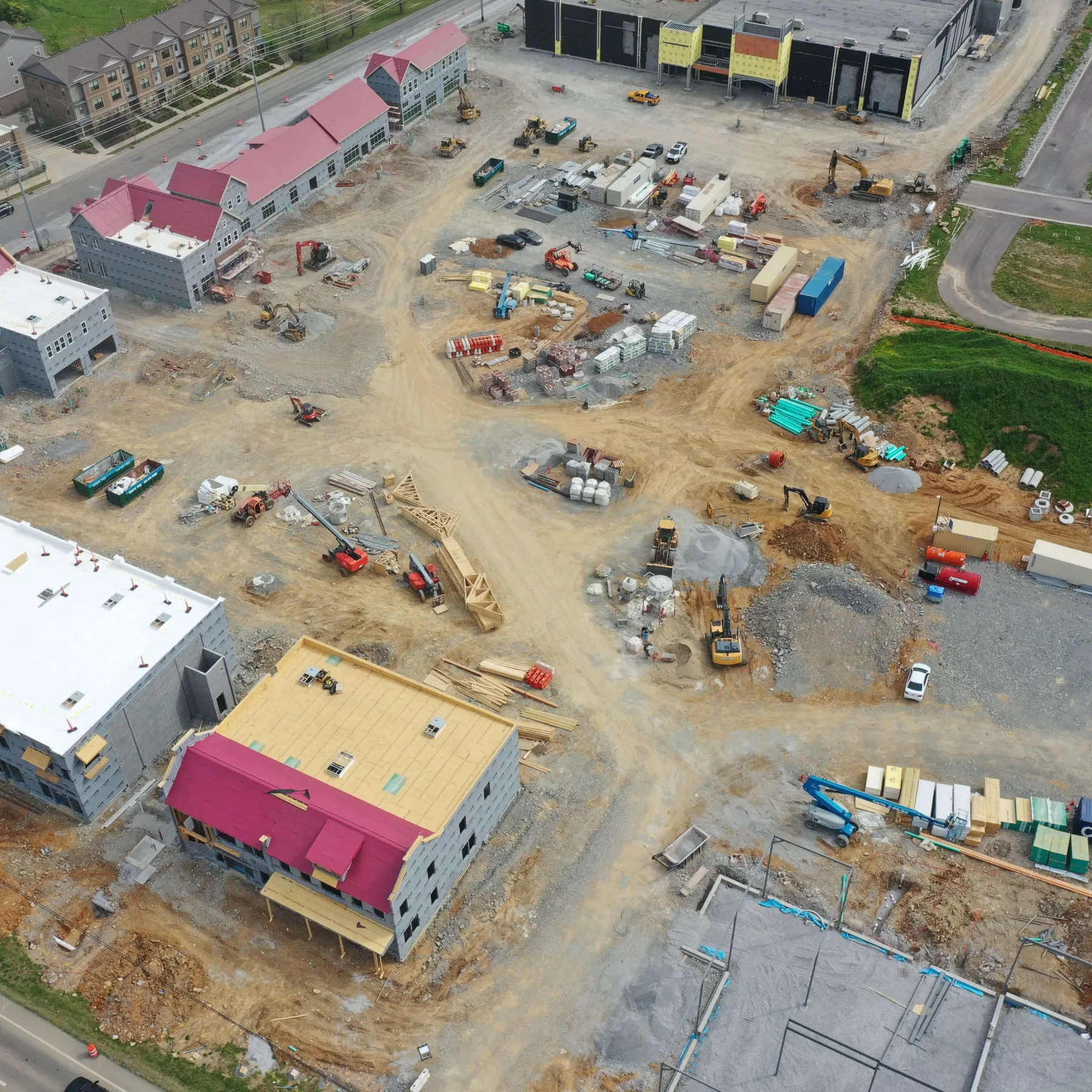
The mixed-use development is located on a 17-acre site along Nolensville Road and Rocky Fork Road. It includes eight buildings totaling 42,200 square feet, approximately 220,000 square feet of parking, and 398 parking spaces.
Owned by Watkins Real Estate Group, developed by WREG Nolensville Retail, and designed by Hiscutt & Associates, the center was intentionally crafted to prioritize pedestrian appeal and feel different from a typical dining and shopping center. Instead of large, flat-roofed boxes with expansive parking lots out front, the buildings mimic individual one- and two-story cottages with detailed architecture. The cottages are positioned closer to the roadway so that parking is discreetly tucked behind each building. The intentional design features large front windows, extra-wide sidewalks, and outdoor patios.
Delivering that vision meant navigating significant site, utility, and environmental challenges. For James Williams, Senior Project Manager at Crain Construction, the project became a clear example of how planning and coordination make all the difference.
“Although a project may look simple on the surface, they all have unique challenges that require extensive planning and coordination with the stakeholders,” James said.
Proactive Collaboration to Keep the Project Moving
Before vertical construction could begin, the team had to clear a maze of existing overhead and underground utilities along both road frontages. Middle Tennessee Electric Cooperative (MTEC) needed to relocate several power lines, and United Communications had to move poles and lines across Nolensville Road to expand service down Rocky Fork. Atmos Energy and College Grove Utility also had infrastructure that crossed the site layout.
Coordinating with all local utilities required frequent on-site meetings, planning and staking new pole locations, reviewing clearances, and adjusting building layouts before crews ever broke ground.
“We were in constant communication with all of these parties and the design team to adjust the design and layout so we could avoid conflicts,” James explained.
Navigating Tight Utility Corridors
As work progressed along the roadside perimeter, the team uncovered just how congested the underground infrastructure really was. Large-diameter utilities, including a 20-inch water main and several natural gas transmission lines, ran directly through areas where new storm systems, road widening, and building improvements were planned.
At the same time, crews were installing new storm lines, conduits, and service lines in the same corridors. To protect existing infrastructure, Crain used jet-vac excavation and potholing to carefully expose utilities before digging. The slower, more deliberate process reduced risk and helped the team avoid costly strikes or shutdowns.
Going the Extra Mile for Environmental Conservation
One of the most technical and time-sensitive challenges involved installing a sewer line beneath Mill Creek, which is home to the protected Nashville crayfish species.
“We coordinated closely with the environmental consultant and TDEC before we started and at the conclusion of the work,” James said.
Crain also partnered with Davey Environmental Services to safeguard the habitat. Crews installed protective nets, removed crayfish by hand, and monitored the work throughout construction.
Despite difficult conditions and weather delays, the team completed the crossing before the permit window expired.
Building With Experience and Care
Village Green highlights something Crain sees on every project: construction is rarely just about the building itself. It’s also about everything around it. Utilities. Environment. Stakeholders. Community.
From coordinating multiple providers to navigating sensitive environmental requirements, the team stayed focused on communication and problem-solving.
“I think our team, the superintendent, the trade partners, and the design team overcame some serious challenges presented by both the weather and logistics,” James said. “We were able to overcome those delays and deliver the project on time to the owner.”
For Crain, a collaborative mindset is what turns a complicated site into a successful project.
If you’re planning a retail or commercial development in Middle Tennessee, our team is ready to help you navigate the details and move forward with confidence.