In Nashville, the days of sprawling greenfield development are quickly fading. Every acre in areas across town—from Germantown and the Gulch to Brentwood and Franklin—comes with a premium price tag. For developers, the real challenge isn’t finding a tenant; it’s making the project numbers work.
This drive for efficiency and impact has fueled the popularity of “jewel box” construction projects. These are smaller, highly-branded retail spaces designed to stand out, attract customers, and maximize brand presence in busy areas. But they also bring unique challenges.
At Crain Construction, we have decades of experience collaborating with project owners to maximize mixed-use opportunities. We recognize the importance of embracing current trends while always keeping the long-term investment in mind. In this article, we wanted to highlight what we are learning and applying when it comes to successful jewel box developments.
Jewel Box Construction: Challenges and Solutions
Building a small, high-impact retail space within a dense urban or mixed-use area requires strategic thinking. Here are a few specific ways Crain’s expertise helps clients navigate the common challenges:
1. Overcoming the Price-Per-Square-Foot Illusion
Jewel box projects often have a significantly higher price per square foot than typical retail spaces. While the square footage is usually smaller, the design requires exterior finishes on all four sides, not just the front.
At Crain, our preconstruction team and collaborative process are incredible assets for navigating this challenge. Our team works closely with developers and architects to confirm priorities, evaluate material options, and design value into the project while keeping the brand’s character intact. This early collaboration ensures the design intent aligns with the budget and schedule from day one.
2. Managing Premium Design Needs
Brand expectations add another complex layer to construction. These concepts depend on distinctive materials, signature finishes, and custom architectural details. That can stretch a budget quickly.
Before full installation begins, we build mock-up panels and supply material samples to confirm the look, feel, and durability. This step helps avoid surprises, protects the schedule, and keeps rework to a minimum.
3. Integrating with Complex Mixed-Use Environments
Most jewel box developments are integrated into a compact footprint within a larger mixed-use development. This makes coordination with surrounding offices, residential units, and hospitality spaces essential.
As a local contractor, being a good neighbor is an important priority for our team. Our team coordinates closely with fellow contractors, tenants, and property managers so construction sequencing fits the rhythm of the development. Good communication keeps disruptions and complaints rare, especially when existing businesses are nearby.
4. Maximizing Visibility and Safety
Jewel box stores also depend heavily on visibility. They’re designed to catch attention from every angle. That means planning pedestrian paths, vehicle access, signage, and safety with more intention.
At Crain, we work with owners and design teams to create a layout that feels welcoming and intuitive while staying within zoning and design guidelines. Because projects are often located in tight-site footprints, we map out phased schedules that consider deliveries, neighboring tenants, public access, and other ongoing construction.
Project Example: 990 Meridian
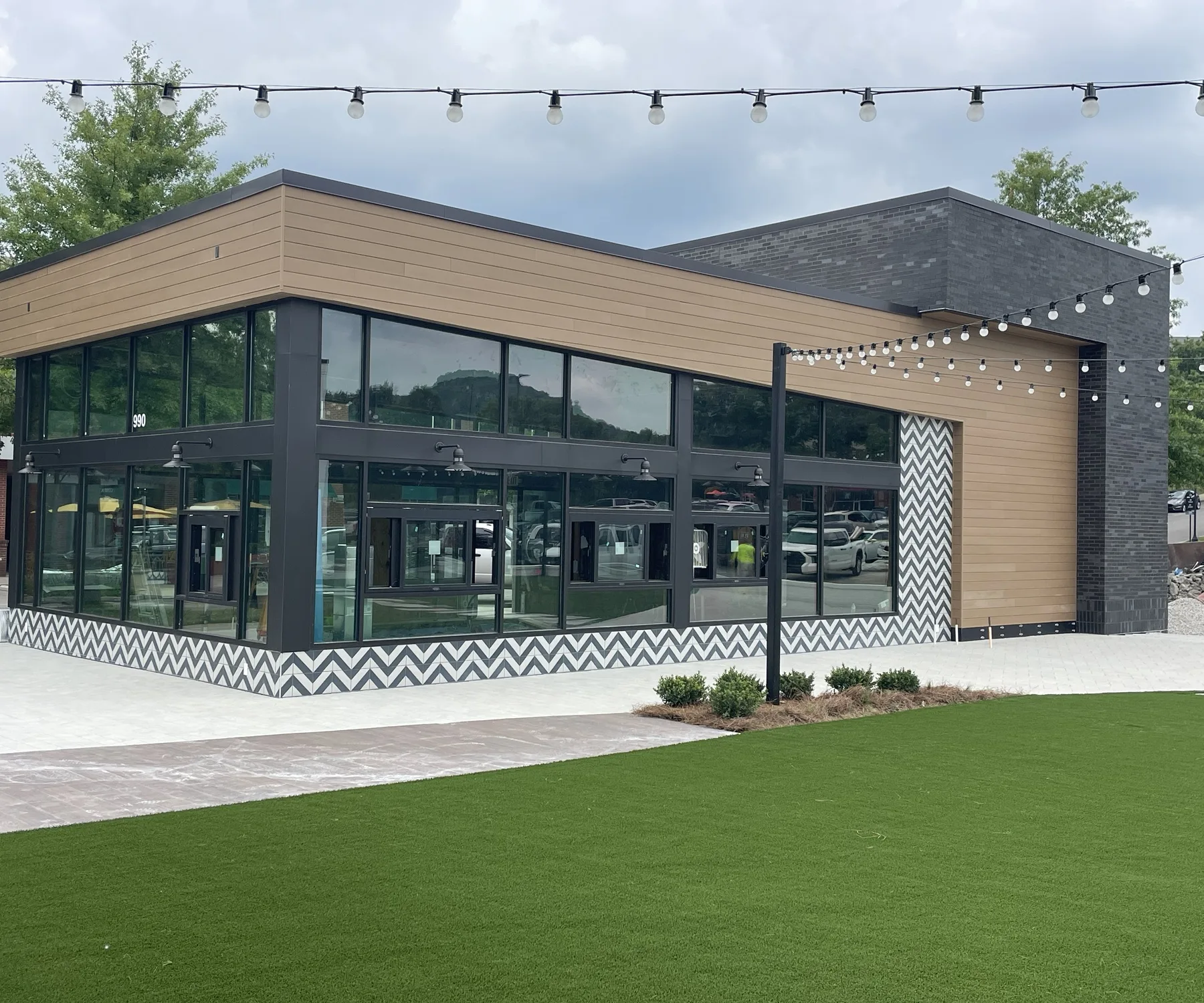
A recent example of this approach is the jewel box space at 990 Meridian Boulevard, part of Boyle Investment Company’s Meridian Cool Springs, a mixed-use project in Brentwood. The team wanted a small-format retail experience that would anchor the development’s pedestrian activity and create a true neighborhood destination.
Early collaboration made the difference. By aligning with the developer and tenant from the start, we shaped a plan that brought brand-driven features to life without costly redesigns. Integrating the building into the larger mixed-use footprint was also a priority that required close coordination. The result is a compact retail space that feels open, accessible, and memorable.
Today, 990 Meridian stands as a great example of how a jewel box concept can elevate the overall development and create a strong identity in a small footprint. The project includes a walk-up window, a welcoming patio, and a flexible event lawn that ties the space to the surrounding community.
Build a Jewel Box Concept That Works for Today and Tomorrow
If you’re planning a mixed-use project or exploring a small-format retail space, our team would be glad to help you think through your next steps. Our team can offer insights and expertise that enable you to get the most out of your site and build something that serves both the brand and the community well.
Ready to elevate the retail presence for your next mixed-use development? Our team can help you maximize every opportunity in the construction process. Take a closer look at some of our mixed-use projects or contact us today to discuss your vision.